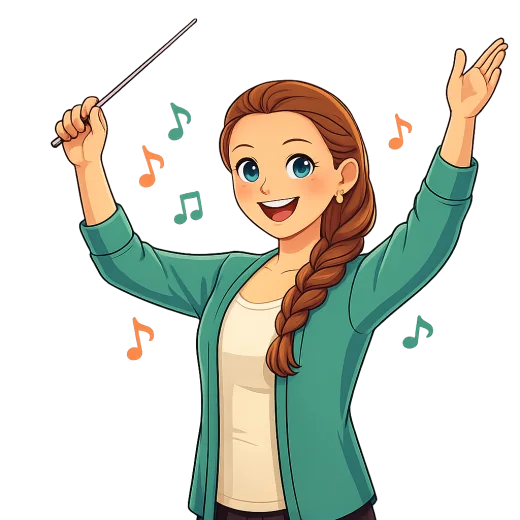
The music starts before sound
A band entrance does not begin when the baton reaches the downbeat. It begins when the conductor gathers the ensemble with attention, breath, and a preparatory gesture.
That preparation can communicate:
- tempo;
- dynamic;
- articulation;
- character;
- where to breathe;
- when the sound begins.
Counting silently helps, but the conductor is the band’s shared source.
Know where to look
Before the entrance, lift the eyes from the page far enough to see the conductor’s upper body, hands, and face.
Keep the printed first measure in peripheral vision. If needed, memorize only the first note, fingering, dynamic, and rhythm—not the entire piece.
Arrange the stand so looking up does not require moving the whole head away from a comfortable playing position.
Breathe with the preparation
Wind players often take the entrance breath as the conductor gives the preparatory motion. The breath should match the musical tempo and character.
A calm, broad preparation may invite a different breath from a quick, energetic one.
Do not breathe so early that the body waits under pressure, or so late that the first note begins after everyone else. Follow the breathing method taught for the instrument.
Percussionists use the same moment to prepare the stroke, mallet height, and internal pulse.
Read size and speed
A larger gesture may indicate more sound or breadth. A small gesture may invite a softer or lighter beginning. The speed and shape of the motion can suggest connected, crisp, heavy, or buoyant style.
These are not universal secret codes. Every conductor has a vocabulary, and the rehearsal is where the ensemble learns it.
Ask when a gesture is unclear.
Practice without playing
Watch several conducted preparations and respond only with breath or silent motion.
After each one, name what you observed:
- fast or slow;
- soft or strong;
- connected or separated;
- relaxed or urgent.
Then add one comfortable note. Match the entrance rather than trying to predict it.
Include releases and changes
Watching is not only for measure one. Look up for:
- entrances after rests;
- fermatas;
- tempo changes;
- ritardandos;
- dynamic turns;
- final cutoffs.
Mark an eyeglass symbol or small reminder in the part several beats before an important cue. The mark should create time to look, not announce that the cue has already passed.
Recover if the entrance feels uncertain
Do not stab at a note merely because other players moved.
Find the conductor’s pulse and enter where the director has taught the section to recover. In some passages, waiting for the next clear beat is more musical than adding a late, panicked attack.
Let the ensemble begin together
Practice this sequence:
- prepare the note and instrument;
- look up;
- receive the tempo and character;
- breathe or move with the gesture;
- begin through the sound, not at it.
A strong first note is not a collection of individuals guessing the same instant. It is the band responding to one visible musical invitation.