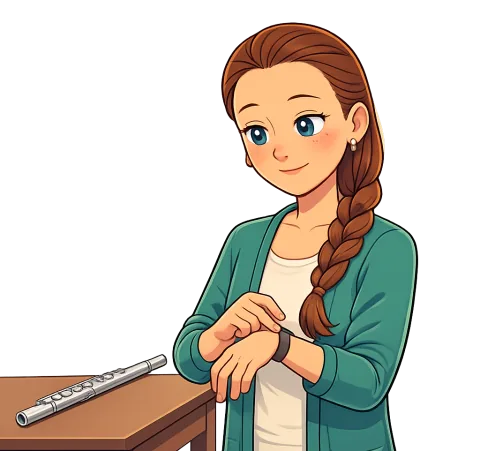
Music should involve effort, not injury
Learning an instrument or singing can feel unfamiliar. Muscles may work in new ways, and concentration can be tiring.
Pain is different from productive attention.
Stop when playing or singing causes:
- sharp, burning, or increasing pain;
- numbness or tingling;
- weakness or loss of normal control;
- swelling;
- dizziness or unusual breathlessness;
- vocal pain or persistent hoarseness;
- symptoms that return each time the same task begins.
A young musician should tell a trusted adult.
Do not finish the repetition to prove anything
When a symptom appears:
- stop producing the sound;
- place the instrument safely down or in rest position;
- release unnecessary effort;
- tell the teacher, parent, or responsible adult;
- do not restart the same motion immediately to “check” it repeatedly.
Playing through a warning sign can make it harder to identify the cause and may increase the problem.
Stopping is a music skill when continuing is unsafe.
Describe what happened without diagnosing it
Useful details include:
- where the symptom appeared;
- what it felt like;
- which movement, note, range, or duration came before it;
- whether it stopped after rest;
- whether it has happened before;
- recent changes in equipment, practice time, repertoire, health, or setup.
Avoid deciding from an internet list that the student has a particular injury.
A music teacher can examine technique and setup. A qualified health professional diagnoses and treats medical conditions.
Check the practice load
Problems can appear after:
- a sudden increase in total playing;
- many repeated attempts without a pause;
- adding marching, auditions, honor groups, or another ensemble;
- returning after illness or time away;
- using a new mouthpiece, reed, mallet, grip, strap, chair, or instrument;
- practicing while unusually tired.
More minutes are not automatically more learning.
The adult team may reduce or reorganize the load while the cause is evaluated.
Check the setup with a teacher
Look for:
- instrument or stand height;
- chair support;
- music placement;
- strap, harness, thumb rest, or instrument support;
- reaching or twisting;
- raised shoulders;
- locked joints;
- gripping beyond what the technique requires;
- a vocal range or dynamic outside healthy instruction.
Do not make major equipment modifications or use a brace, splint, pain medicine, or exercise as a do-it-yourself treatment plan.
An adaptation should come from someone qualified to understand the musician, instrument, and health concern.
Keep alternative practice truly comfortable
Depending on the situation and adult guidance, a student may be able to:
- listen to the assigned music;
- count rhythms;
- study the score;
- label form;
- hear pitches internally;
- organize materials;
- write questions for the teacher.
Silent fingering, tapping, humming, conducting, or mental rehearsal may still use the irritated body part or voice. Stop any alternative that reproduces symptoms.
Rest is allowed to be actual rest.
Return gradually
When the appropriate adult or professional says it is reasonable to resume:
- confirm the setup;
- begin with an easy, short task;
- use comfortable range and volume;
- pause before fatigue changes the motion;
- note whether symptoms return;
- increase demand only through the agreed plan.
Do not make up every missed minute in one session.
The first goal is a comfortable, coordinated response—not proving that nothing happened.
Know when more help is needed
Promptly involve a parent or guardian and appropriate health professional for severe or sudden symptoms, injury, breathing trouble, marked weakness, persistent numbness, significant swelling, sudden hearing or voice changes, or symptoms that do not resolve as expected.
Teachers should also be told so rehearsal demands and setup can be adjusted.
Emergency symptoms require emergency help according to the family’s and program’s procedures.
Build a culture where stopping is safe
Students should not have to hide pain to keep a chair, part, grade, or adult approval.
Parents and teachers can respond with:
- belief;
- calm questions;
- protection from further strain;
- qualified guidance;
- a realistic return plan.
Musicianship is a long relationship with hearing, voice, hands, breath, and movement. Protecting that relationship matters more than completing one practice chart.